

Article: 5 Silk Bedding Mistakes to Avoid

5 Silk Bedding Mistakes to Avoid
The silk bedding mistakes worth avoiding are simple: choosing by appearance alone, overlooking care instructions, ignoring pillowcase closures, mistaking polyester satin for pure silk and buying an offer without checking the details. If you are buying your first silk pillowcase or upgrading your bed linen, this five-point checklist will help you check the fabric, fit and care before ordering. Here is what to look for instead, from authentic Mulberry silk and the right momme weight to proper care, closure details and the product information that separates genuine quality from clever marketing.
1. Choosing silk bedding by appearance alone
When comparing silk sheets and silk pillowcases, look beyond the photograph. Check the fibre composition, momme weight, finish and dimensions. A beautiful colour cannot make up for a fabric that does not feel right against your skin.
Check the Mulberry silk and momme weight
Momme measures silk fabric weight, rather than thread count. A higher number means a heavier fabric, but weight alone does not establish quality. The silk itself, weaving and construction matter too, and checking the product label can help you compare different types as care and performance can vary. Mulberry silk describes the silk fibre; it is not a guarantee of a particular weight or finish. It is made by silkworms fed on mulberry leaves, which helps give the fibres their smooth, uniform look.
Mayfairsilk uses 25 Momme pure Mulberry silk for pillowcases and 22 Momme for sheets and duvet covers. Our soft-touch matte finish has a subtle sheen rather than a high-gloss appearance. If you are comparing 19 and 22 Momme, the latter is heavier, not automatically better in every respect. Choose the feel, construction and material that suit the piece.
Silk’s smooth surface helps reduce friction against skin and hair, which can help minimise morning tangles, reduce hair breakage and frizz during sleep, and lessen temporary sleep creases while helping skin retain moisture better than cotton. Naturally hypoallergenic silk can also feel gentle against sensitive skin, and because it absorbs less moisture than cotton, it may help reduce irritation for some people. That does not mean it treats a skin condition or guarantees an irritation-free night.
Think about comfort and fit
Silk is naturally breathable and temperature regulating, making it useful across summer and winter. Hot sleepers may enjoy its cool first touch, while the layers above it help retain warmth on cooler nights. In practice, silk bedding works across seasons because it feels light and breathable yet can still help keep you warm. Your duvet filling, pillow filling, room temperature and personal preference all affect temperature regulation. No sheet can promise to prevent night sweats.
Measure your pillows before ordering: Mayfairsilk Standard fits 50 × 75 cm and Super King fits 50 × 90 cm. Check mattress width, length and depth, including any topper, before choosing a fitted sheet. Measure the duvet separately too.
Start with our 25 Momme silk pillowcases, or explore silk bed sheets for a fuller change of scene.
2. Overlooking the care instructions
Before you buy, check whether the silk bedding is machine washable and whether its care routine fits yours. Mayfairsilk pillowcases and bed linen can be machine washed on a suitable delicate cycle when their care instructions are followed, but you should still avoid bleach, unsuitable detergents, and other harsh chemicals. Other silk products may require hand washing or dry cleaning. Follow the care label on the individual item.
How to wash silk bed sheets
For Mayfairsilk, use cool water below 30°C and a pH-neutral, enzyme-free delicate detergent explicitly labelled as suitable for silk. A bottle marked “gentle” or “non-bio” is not enough on its own.
Silk is a protein fibre. Protease enzymes in some biological detergents can damage it. Avoid bleach, fabric softener and unsuitable stain removers. Wash silk separately from rough fabrics, using a mesh laundry bag and a silk or delicate machine cycle, or a gentle hand wash.
Press out excess water with a clean towel rather than wringing. Twisting wet silk can strain or distort the fabric and damage its seams. Air drying should be in the shade, away from direct sunlight and heaters. High heat can shrink or scorch silk, so do not tumble dry or use a hot iron. If ironing is permitted, follow the label and use a cool silk setting, preferably on the reverse while slightly damp.
Let skincare absorb before your face meets the pillowcase, and keep products containing bleaching ingredients away from coloured silk. Store clean, completely dry bed linen in a cool, dry place, in breathable fabric storage rather than sealed plastic.
Silk need not feel high maintenance, but it does need the right routine. Read our silk care guide for the full method, or discover why silk needs a delicate detergent.

3. A zip where you would rather have silk
A zip closure is a design choice, not proof of poor-quality silk. If you prefer a pillowcase without hardware near your face, though, check the fastening before ordering.
Mayfairsilk pillowcases use an envelope closure. The pillow tucks into a fabric pocket, with no zip to press against your cheek. Ease it into position rather than pulling hard on the opening or seams.
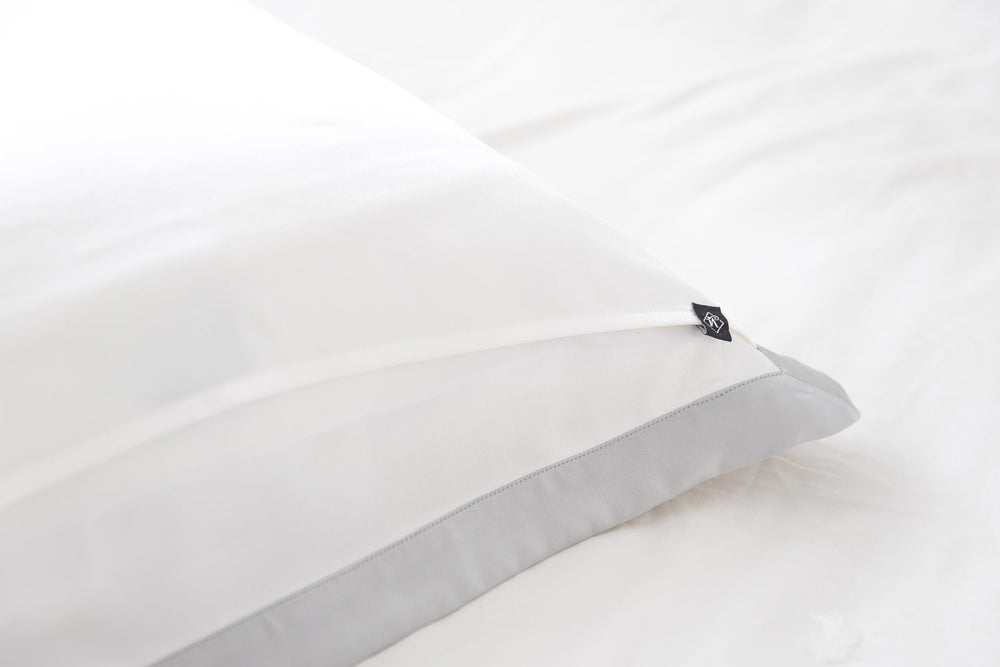
Classic pillowcases have a clean outline; Oxford pillowcases add a 3 cm decorative border beyond the pillow fit. Both use 25 Momme silk and an envelope pocket. Choose the shape that suits your bedroom decor, then check the size and available colour on the individual product page.
The small details deserve attention: neat stitching, comfortable seams and an opening that works with your pillow. A high-quality finish is about construction as well as softness.
4. Polyester satin dressed up as pure silk
A glossy photograph cannot tell you what a fabric is made from. Check the composition, particularly when a product is described as a silk blend.
Pure silk is a natural fibre. Satin is a weave that can be made from silk, polyester or other fibres. A satin pillowcase can therefore be real silk, but “satin” alone does not tell you what it is made from.
Polyester is a synthetic fibre. Polyester satin may feel smooth, but it is not pure silk. Look for the actual fibre composition, rather than relying on “silky”, a glossy finish or a low price. A blend should state its components and percentages.
Likewise, charmeuse silk describes a fabric construction, while Mulberry silk describes the fibre. These terms answer different questions. Neither replaces a clear composition label.
Compare silk products using the same details: composition, weight, dimensions, finish and construction. Be wary of promises that bedding prevents acne, eliminates dust mites or guarantees better sleep. A smooth fabric can support comfort without becoming a medical treatment.
If you are deciding between materials, our silk versus satin pillowcase guide explains the distinction.
5. Missing the details before you buy
We would hate for a lovely offer to end with the wrong size arriving at your door.
Before placing your order, check what you are actually buying. Silk bedding sets do not all contain the same pieces. A duvet cover is the outer cover, not a silk-filled duvet. Pillowcases cover your existing pillows; they do not include silk filling. Compare the listed contents as carefully as the price.
The best silk bedding for you is the one that suits your bed, preferred feel and care routine. A higher price is not proof of exceptional quality; check the specifications and construction. If your cotton sheets still work well, a single silk pillowcase can be a useful first step. There is no need to replace everything at once.
Your before-you-buy checklist
Fibre: does the composition clearly state pure silk or the precise blend?
Weight: is the momme weight specified for each piece? Mayfairsilk uses 22 Momme for bed linen and 25 Momme for pillowcases.
Fit: have you checked pillow, mattress and duvet dimensions?
Details: do the closure, seams and finish suit you, and if the product page is vague, have you researched the material and construction?
Care label: have you checked it, since different types of silk can have different washing and drying requirements?
Care and value: can you follow the washing instructions, and have you read the offer and returns terms?
Browse our current silk offers and check the details on your chosen product. Choose the pieces that suit your bed, with all the details checked.
A few silk bedding questions, answered
What are the disadvantages of silk bedding?
Silk costs more than many everyday bedding fabrics and needs suitable detergent, gentle washing and air drying. It can still be a great choice for people who want a soft, elegant bed and are happy to follow the care routine. It can be damaged by heat, rough handling and unsuitable laundry products. Check the care label before deciding whether it suits your household.
Is Mulberry silk the same as 100% silk?
Mulberry silk is one type of real silk. “100% silk” states the fibre composition but does not specify the silk type, and Mulberry silk comes from silkworms fed on mulberry leaves, which is one reason it is associated with consistent quality. It also does not tell you about the different types or grades within that category. Look for both descriptions alongside weight, finish and construction.
Why does silk feel different after washing?
Detergent residue, an unsuitable laundry product or excessive heat may change the feel, especially as silk is a delicate material and different types may react differently depending on the care label. Check the product label and care guide before trying a remedy. Do not add fabric softener or repeat harsh treatments in an attempt to restore softness.
Does a silk duvet cover need the same care as a silk duvet?
No. A washable woven silk cover and a duvet containing silk filling are different products. A silk-filled duvet is designed to help keep you warm, while a silk duvet cover is the lighter outer layer with a different role. Follow each item’s own care label. Do not assume instructions for Mayfairsilk sheets also apply to a silk-filled duvet or silk blanket. Short version: treat the cover and the filled duvet as separate items and follow each label.


Leave a comment
This site is protected by hCaptcha and the hCaptcha Privacy Policy and Terms of Service apply.