




How to Read Silk Quality Before You Buy
Most silk bedding is marketed with a single claim: "100% Mulberry silk." That tells you the fibre type but says nothing about the grade of the raw silk or the weight of the woven fabric, which are the two factors that determine whether a pillowcase still feels smooth after six months of washing or starts pilling within weeks. A 16-momme Grade B Mulberry pillowcase and a 25-momme Grade 6A Mulberry pillowcase are both technically "100% Mulberry silk," but they perform nothing alike.
Look for a label that states all three: the grade (6A is the highest), the momme weight (22 to 25 for bedding), and the fibre type (pure Mulberry for the longest, most uniform strands). If any of those three is missing from the product listing, it is usually because the number wouldn't impress, and the price reflects a product that looks like premium silk on screen but feels and wears like something less in person.
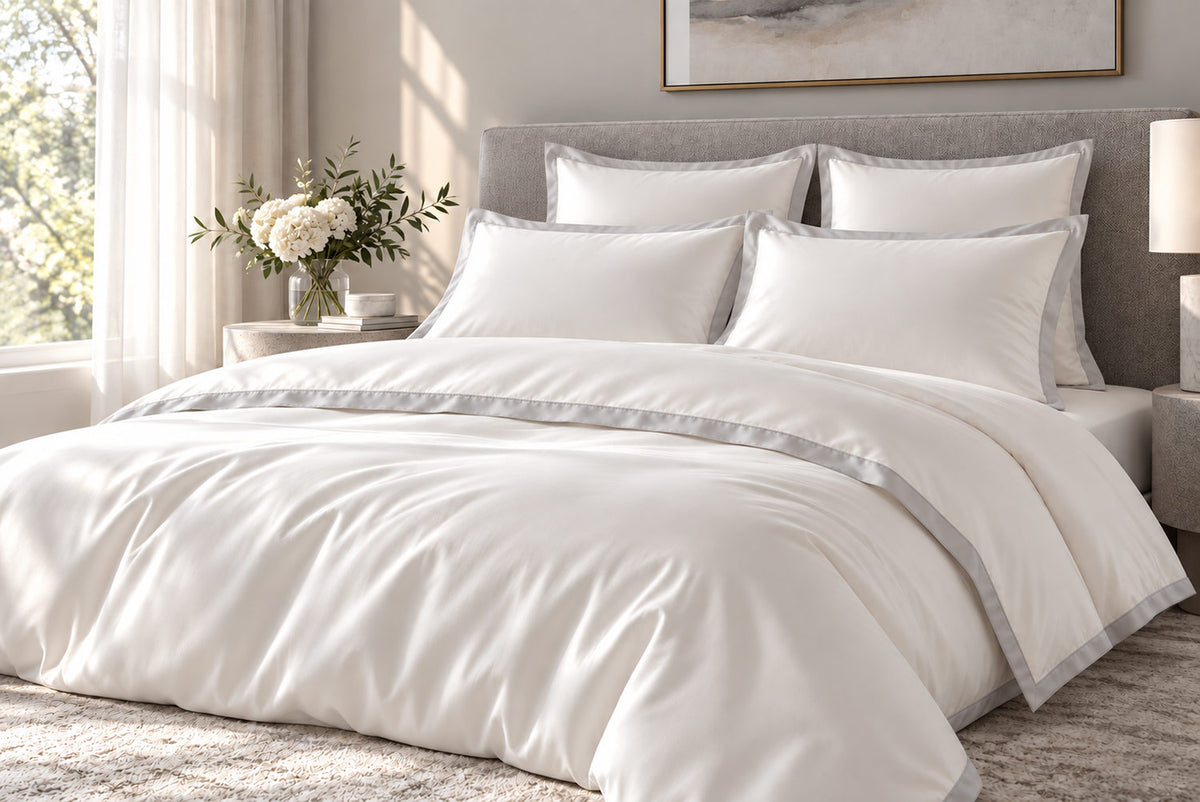
Mayfairsilk lists all three on every product. Sheets and duvet covers are woven from Grade 6A pure Mulberry silk at 22 momme, pillowcases are finished at a thicker 25 momme, and OEKO-TEX Standard 100 certification confirms the fabric is free from harmful substances.
Mayfairsilk: Luxurious Slumber in Matte Silk
As Featured in Marie Claire, Harper's Bazaar & Vanity Fair

Experience True Silk Luxury: Get 25 Momme pillowcases that reduce friction on hair and skin, 22 Momme thermoregulating sheet sets with our signature matte finish, and limited-edition prints made in small, distinctive batches.
✓ Thicker, more durable weave (22–25 Momme vs. standard 19)
✓ Natural thermoregulation for year-round comfort
✓ UK-based warehouse for fast, reliable delivery
✓ 30-night sleep guarantee on pillowcases
What Are the Different Grades of Silk?

Silk grading covers roughly 11 tiers in total, split between the six Grade A sub-tiers at the top and the letter grades that follow, right down to fibres too rough to rank.

